
Background and rationale
The Guadalquivir River Estuary (GRE) is a cornerstone of both the current and future socioeconomic development of Andalusia. It serves as a vital breeding and nursery ground for species that constitute key fisheries in the Gulf of Cádiz. However, despite its ecological and economic significance, the estuary has experienced considerable anthropogenic transformation over the past century and remains under continued stress due to multiple pressures, including:
Reduction in freshwater flow:
The water flow from the Alcalá del Río dam cannot compete with the strong coastal drift at the estuary mouth, leading to silting issues.
Periodic dredging:
Dredging works to facilitate navigation to the port of Seville alter the natural estuarine dynamics and significantly affect water quality.
Climatic change:
Induced climate variability alters the main physical drivers that shape hydrodynamic and biogeochemical processes in estuarine systems.
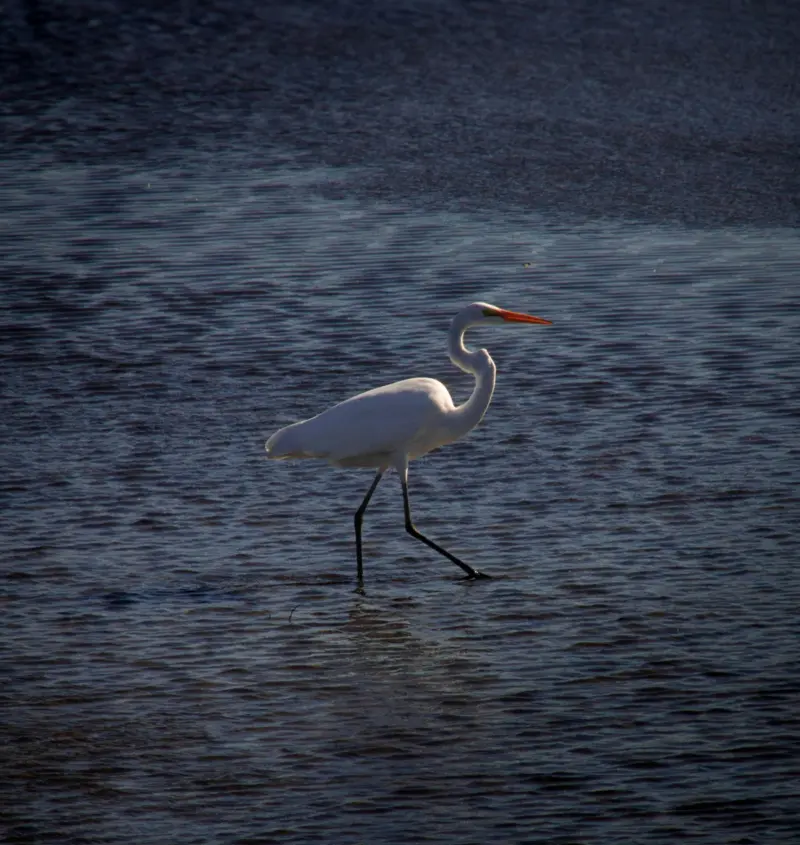
The maintenance of its role is affected by the critical situation of reduced flows and changes in the biogeochemical conditions of the water masses. Naturally, one might ask:
RQ#1: What is the impact of environmental conditions and human activities on the water quality of the Guadalquivir River Estuary?
RQ#2: How will turbidity episodes, the advance of the saline wedge, the renewal capacity of the estuary, water mass quality, and anthropogenic actions affect biodiversity?
RQ#3: How can be modeled the hydromorphodynamic and physicochemical processes and their impact of the water quality and on the biodiversity of GRE ecosystems?
RQ#4: What will be the trend in the next decade of water quality and biodiversity of ecosystems at GRE?
RQ#5: What kind of adaptation/mitigation strategies can be implemented to build resilience capacity at GRE?
Objectives
The main objective of BARRiEr project is to deepen our understanding of the physicochemical and hydrodynamic processes of the GRE and the relationship with its biodiversity. The expected primary outcome is the proposal of adaptation and mitigation measures that maintain and/or improve the resilience of the state of the GRE food web and coastal fisheries.
To this end, the following specific objectives are proposed:
-
SO1. To model the hydromorphodynamic and physicochemical processes of the estuary
considering the discharges at the head dam, the river contributions of the tributary sub-basins and the variability along the axis of the estuary channel area, including the fluvial and tidal floodplains. (RQ#3).
-
SO2. To analyze the impact
of water quality (salinity, temperature, concentration of suspended solids), environmental conditions (astronomical tide and meteorological conditions) and anthropogenic actions (land use, regulation of freshwater flow, occupation of flood plains, channel maintenance works) on the functioning of the estuary and the adjacent coastal fisheries as a breeding area for key species of the trophic network (RQ#1).
-
SO3. To diagnose the evolution of the non-linear dynamic coupled ecosystem
and identify the environmental circumstances (events defined by the combined values of density, salinity, turbidity, temperature, solar radiation, and their persistence) under which biodiversity deteriorates, is maintained, or improves. (RQ#2).
-
SO4. To forecast the hydromorphodynamic, physicochemical processes
and hence, the water quality and food web of the GRE and define a series of metrics and spatiotemporal indicators that allow its characterization (RQ#4).
-
SO5. To propose a series of pathways
for improving the resilience of water mass and food web to changes on environmental conditions or human actions (RQ#5).
The aforementioned objectives will allow us to address two of the measures of the Priority Action Framework (PAF) for Natura 2000 in Andalusia under Article 8 of Council Directive 92/43/EEC on the conservation of natural habitats and of wild fauna and flora for the multiannual financial framework for the period 2021-2027, specifically:
-
[1] The establishment of the ecological flows of the Bajo Guadalquivir ZEC, achieving a good degree of conservation of the habitats and species that constitute priority elements in each place (M1013).
-
[2] The definition of the Good Ecological Potential of the Estuary, so that it comes as close as possible to the good ecological status considering the conservation needs and objectives of the ZEC, its habitats, and its species. The Guadalquivir Confederation should also be urged to review the flows established for the rest of the basin to comply with the flows required by the estuary (M1738).
Methodology
The BARRIER project will be developed in five stages:
-
WP1. Modelling the hydromorphodynamic processes (SO3).
An hydromorphodynamic model will be extended to cover the GRE, floodplains and catchment basins, tributaries, marshes, and tidal flats. Spatial connectivity beyond will be achieved from the lateral flows of runoff contributions. In this way, the export hypothesis is partially addressed and the dynamic environments represented by the tidal flats and the areas of special influence for the habitats of estuarine ecosystems are considered. The model will operate at an hourly time scale.
-
WP2. Analysis of functional relationships between water quality and
environmental variables and coupled ecosystem biodiversity (SO1).The tasks defined in WP2 will facilitate the subsequent spatiotemporal analyses of the variables involved, namely spatial and temporal calibration, validation, projection, and statistical analysis.
-
WP3. Diagnosis of the evolution and trend of the coupled ecosystem and identification of the environmental circumstances of relevant events (SO2).
The analysis presented in this WP is paramount. It will allow to rigorously define a set of indexes that relate abiotic and biotic conditions.
-
WP4. Short- to medium-term forecasting model for the quantification of the biodiversity indexes of WP2 (SO4 & SO5).
The results of the model will determine the changes that the biogeochemical and hydromorphological variables of the GRE will undergo. Therefore, we will be able to determine the impact that a given measure or strategy will have on the GRE biodiversity.
-
WP5. Dissemination activities.
Press releases and informative videos, website and social media management, attendance at conferences, workshop development, publication of scientific articles, writing of intermediate and final reports.