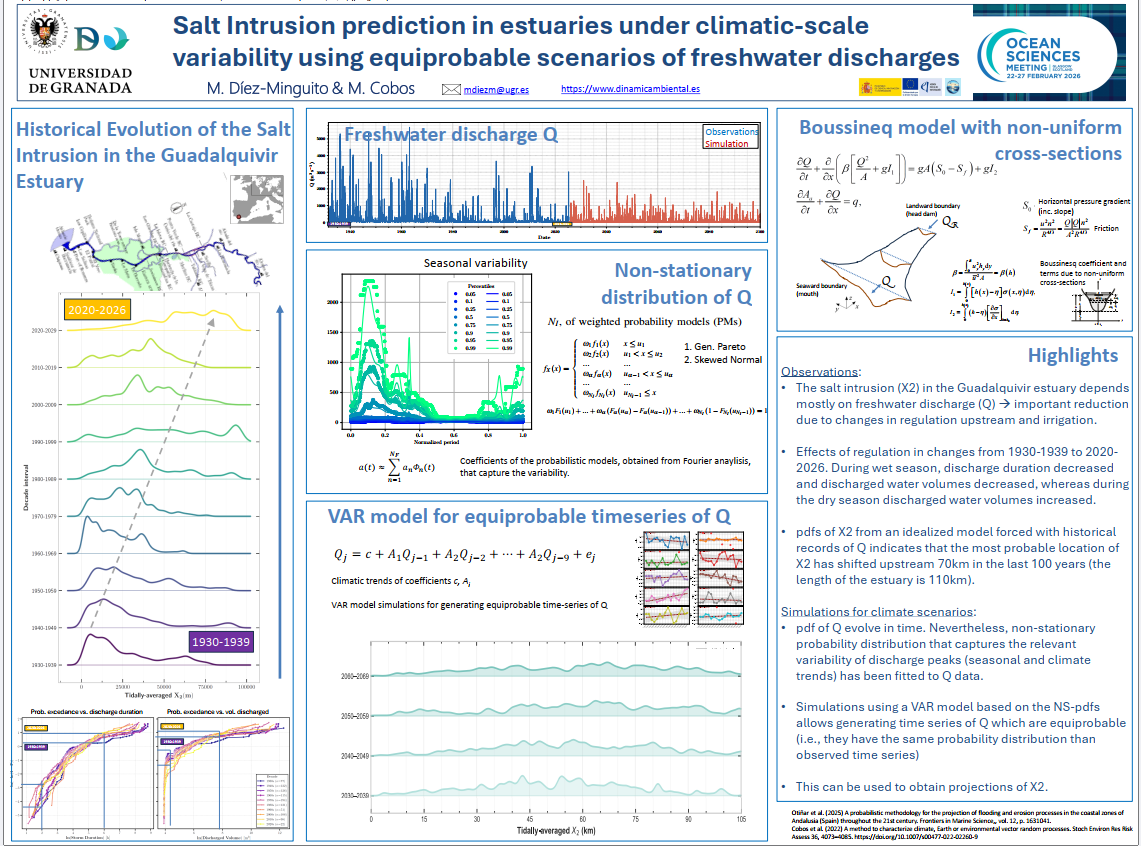

The Guadalquivir River Estuary is still under stress due to:
Anthropogenic activities such as the reduction of freshwater discharge and periodic dredging
Alterations in biogeochemical and hydrodynamic processes driven by climate change
To build the analysis capacity for improving the resilience capacity of the GRE, BARRiER will answer Research Questions such as:
(1) How will turbidity episodes, the advance of the saline wedge, the renewal capacity of the estuary, water mass quality, and anthropogenic actions affect biodiversity?
(2) What types of adaptation/mitigation strategies can be implemented to build resilience capacity in the Guadalquivir Estuary?
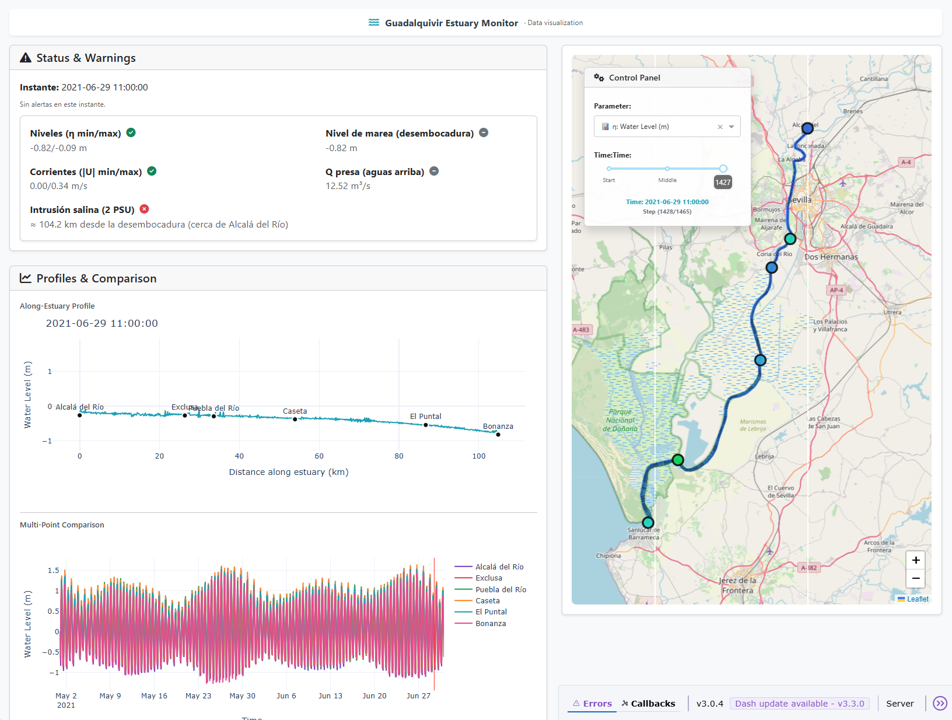
To model the hydromorphodynamic and physicochemical processes of the estuary.
To analyze the impact of water quality, environmental conditions and anthropogenic actions.
To diagnose the evolution of the non-linear dynamic coupled ecosystem.
To forecast the hydromorphodynamic, physicochemical processes.
To propose a series of pathways for improving the resilience of water mass and food web.
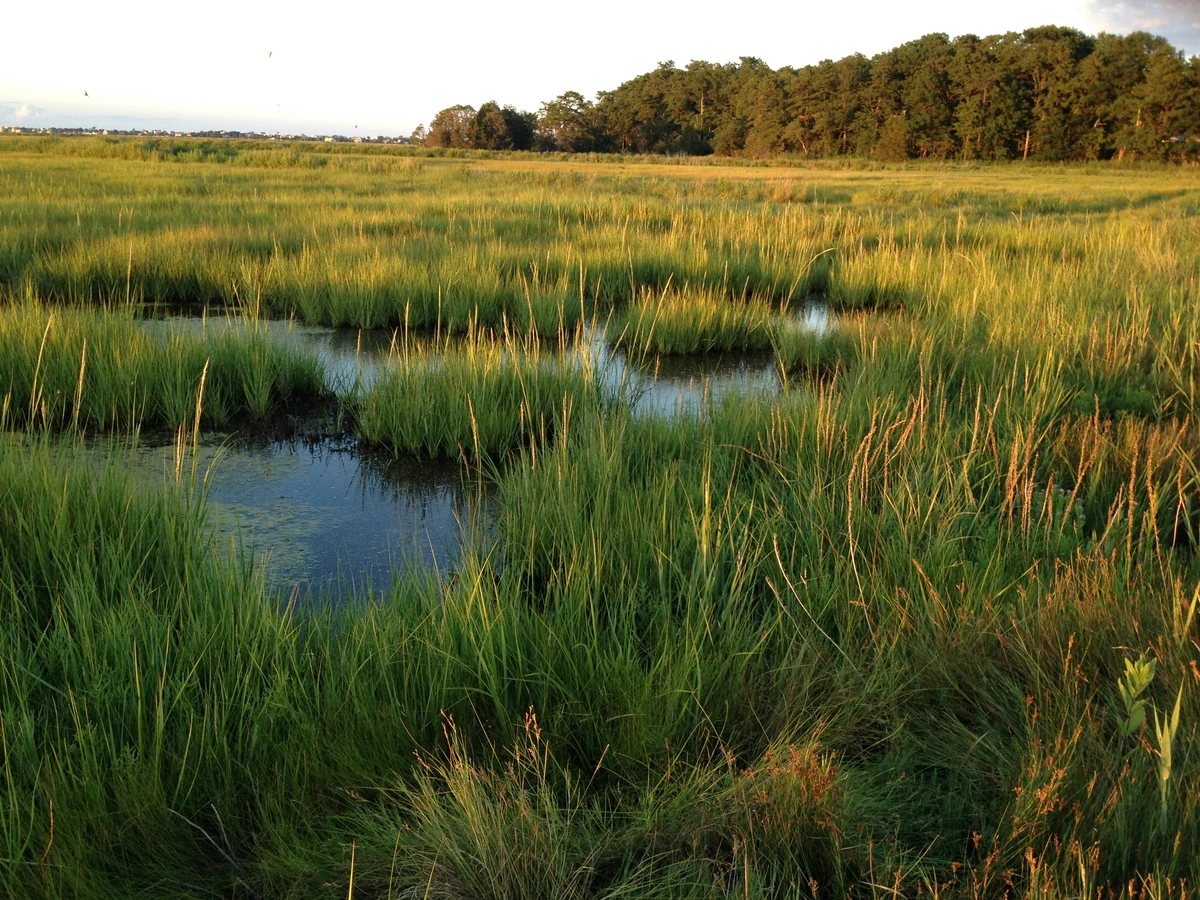
Modelling the hydromorphodynamic processes.
Analysis of functional relationships between water quality and environmental variables and coupled ecosystem biodiversity.
Diagnosis of the evolution and trend of the coupled ecosystem and identification of the environmental circumstances of relevant events.
Short- to medium-term forecasting model for the quantification of the biodiversity indexes of WP2.
Includes the dissemination activities.
If you have any questions, you can contact our team through the following form: